

A Complete Guide for 2026
In 2025, the conversation around AI was focused on efficiency and “magic” answers. In 2026, the stakes have fundamentally shifted. For high-consequence industries, the novelty of generative AI has been replaced by a rigorous requirement for Sovereignty, Trust, and Explainability. When an AI error in a technical manual can lead to a grounded fleet, a halted production line, or a life-threatening medical oversight, “close enough” is no longer an option.
What is a Sovereign AI Knowledge Base?
A Sovereign AI Knowledge Base is a verified, closed-loop platform where every output is grounded in your specific technical documentation. Unlike general-purpose AI, it does not rely on “world knowledge” that can lead to hallucinations. Instead, it acts as an intelligent interface for your private data.
The Four Pillars of 2026 AI
- Sovereignty: Your data never leaves your controlled environment. Your models are yours, and no third-party provider uses your prompts for training.
- Trust through Grounding: Answers are not “generated”—they are retrieved. Every word is linked to a specific paragraph, image, or schematic in your vetted documents.
- Explainability (Visual RAG): In 2026, a text answer is insufficient. True explainability includes multi-modal Visual RAG, where the AI provides the exact technical drawing or video timestamp alongside the explanation.
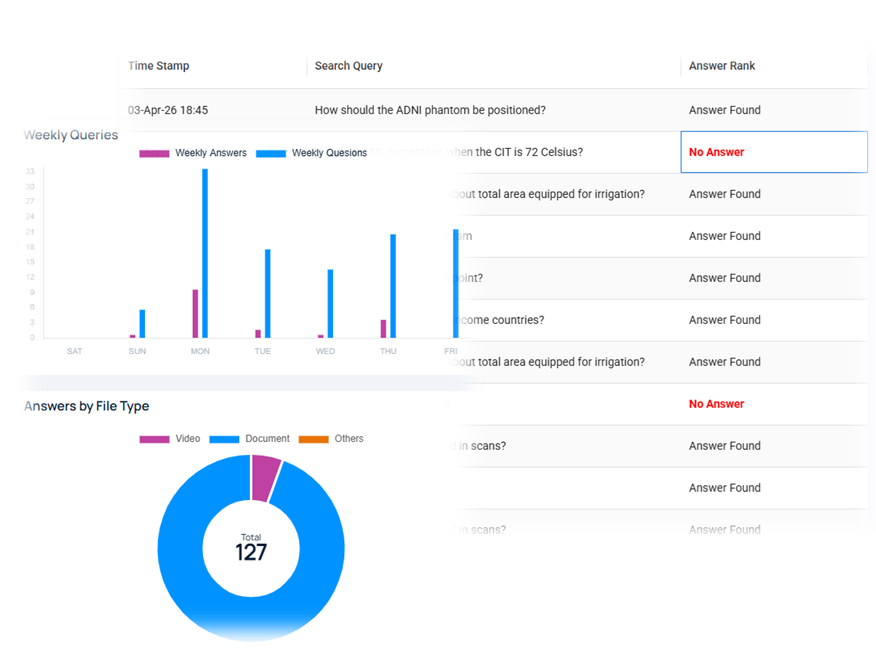
- Closed-Loop Verification: The system identifies what it doesn’t know, flagging documentation gaps rather than making up answers.
Why the Concern? The High Cost of One Error
As AI becomes deeply integrated into the “frontline,” the industry has realized that LLM hallucinations are not just technical glitches—they are safety risks. In aerospace or healthcare, a single incorrect torque value or a misread dosage instruction can endanger lives. This has led to a transition away from “Cloud-First” to “Safety-First” architectures.
Deployment Architectures: On-Prem, Private Cloud, and Cloud
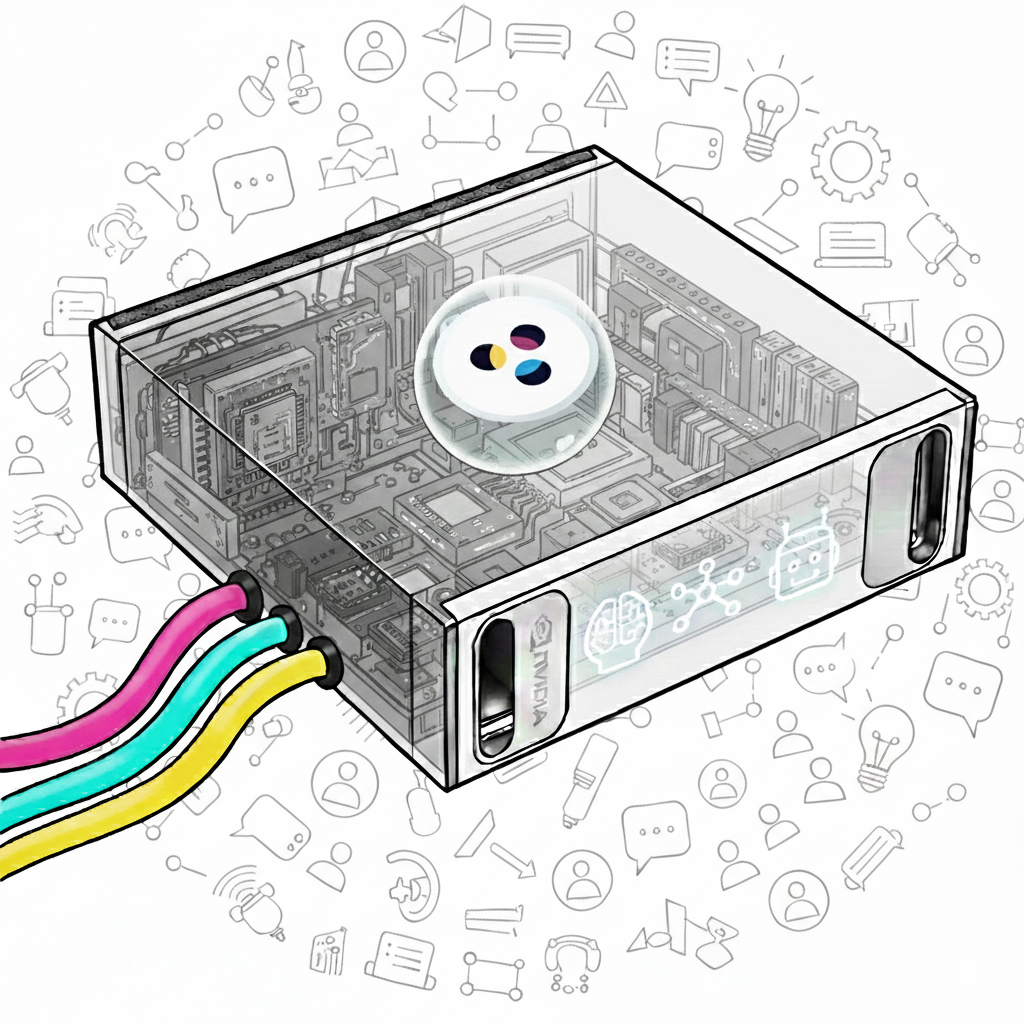
- On-Premise (The AI Appliance): For truly air-gapped environments. The AI runs on local hardware (like Nvidia-powered appliances) within your physical facility. This offers 100% privacy and zero data leakage.
- Private Cloud: The AI infrastructure is hosted on dedicated instances controlled by your organization. You get the scalability of the cloud with the isolation of on-prem.
- Cloud: Suitable for non-sensitive operations. While modern cloud AI includes robust encryption, it is generally avoided by industries requiring absolute data sovereignty.
Industry-Specific Use Cases
| Industry | Use Case | The Trust Factor |
|---|---|---|
| Healthcare | Surgical protocols & medical device schematics. | Integrated viewers verify clinical trial sources instantly. |
| Finance | Regulatory frameworks & compliance audits. | Full auditability: every internal policy traces back to filings. |
| Manufacturing | Frontline troubleshooting for technicians. | Visual RAG shows exploded-view diagrams in real-time. |
| Aerospace | MRO for fleets with unstructured paper records. | Sovereign deployment protects sensitive flight data. |
| Semiconductors | Fab operations & chip design IP management. | Proprietary architectures never touch a public model. |
Identifying Gaps: The Closed-Loop Mechanism
You cannot manage what you cannot see. A 2026 knowledge base must perform Deep Analytics to identify “Systemic Documentation Voids.” By analyzing unanswerable queries and verification failures, the platform provides a “Hardening Report,” turning unknown risks into actionable documentation requirements.
The EU AI Act
The EU AI Act is a comprehensive regulatory framework designed to ensure that artificial intelligence systems used in the European Union are safe, transparent, and respectful of fundamental rights. It categorizes AI applications by risk level—ranging from “unacceptable,” which are banned, to “high risk,” which must meet strict requirements for data quality, documentation, and human oversight. This regulation is directly related to the concept of a Sovereign AI Knowledge Base because such systems are specifically engineered to address these compliance needs through “Safety-First” architectures. By operating in closed-loop, often on-premise or air-gapped environments, a sovereign knowledge base ensures data privacy and “Trust through Grounding,” where every AI output is linked to verified documentation. This level of explainability and rigorous data control helps organizations in high-consequence industries meet the EU AI Act’s demands for transparency and reliability while eliminating the risks of data leakage and hallucinations common in general-purpose, cloud-bound AI.
How the Market Compares: Evaluating Alternatives
While the “AI Knowledge Base” space is crowded, most platforms are built for general office environments rather than high-stakes industrial use cases. Here is a look at the current landscape and where legacy or consumer-grade solutions fall short:
- LayoutLM (Google Stack): While powerful for document parsing, these solutions are strictly cloud-bound. They offer no white-label capabilities (preventing you from using your organization’s own UI), struggle with massive enterprise knowledge bases, and force vendor lock-in to Google’s tech stack.
- Microsoft Copilot: Copilot effectively handles large documents but shares similar structural problems. It is cloud-only, lacks white-label flexibility, and strictly demands that your entire enterprise infrastructure lives within the Microsoft stack.
- Humata AI: A consumer-oriented tool that acts as a basic “chat with PDF” interface. It is only available via the cloud and lacks support for essential industrial data formats like spreadsheets or training videos.
- Poka: Often used in frontline manufacturing, but it is fundamentally a worker-connectivity app rather than an AI Knowledge Base. It lacks a true system of record, content versioning, deep document search, and spreadsheet support.
- Aquant: A service intelligence platform that suffers from a lack of multimodal support (like processing images/video) and enterprise-wide search. Furthermore, it requires a heavy, manual onboarding effort, whereas modern solutions like Korra auto-sync seamlessly with repositories like SharePoint.
- Glean (Market Alternative): An excellent search tool for corporate IT environments (Slack, Google Workspace), but it is cloud-reliant and lacks the Visual RAG and schematic-level intelligence required for heavy machinery or air-gapped environments.
- Guru (Market Alternative): Built around bite-sized “knowledge cards” for sales and support. It is not designed to ingest unstructured, 1,000-page technical manuals or operate within the rigorous security protocols of sovereign deployments.
Conclusion: From Search to Discovery
In 2026, the goal is no longer just “finding information.” It is about empowering the frontline with a single source of truth that is as auditable as it is intelligent. By focusing on sovereign, grounded, and visual AI, organizations can finally move past the fear of hallucinations and into a future of verified operational intelligence.